Dragons, mystical creatures of immense power and symbolism, have captured the imaginations of cultures across the globe for centuries. From the majestic serpentine beings of Chinese mythology to the fire-breathing behemoths of Western folklore, dragons have left an indelible mark on human storytelling and cultural heritage. While both Chinese and Western dragons share certain characteristics, they are steeped in distinct cultural contexts, each embodying unique traits and symbolism reflective of their respective origins.
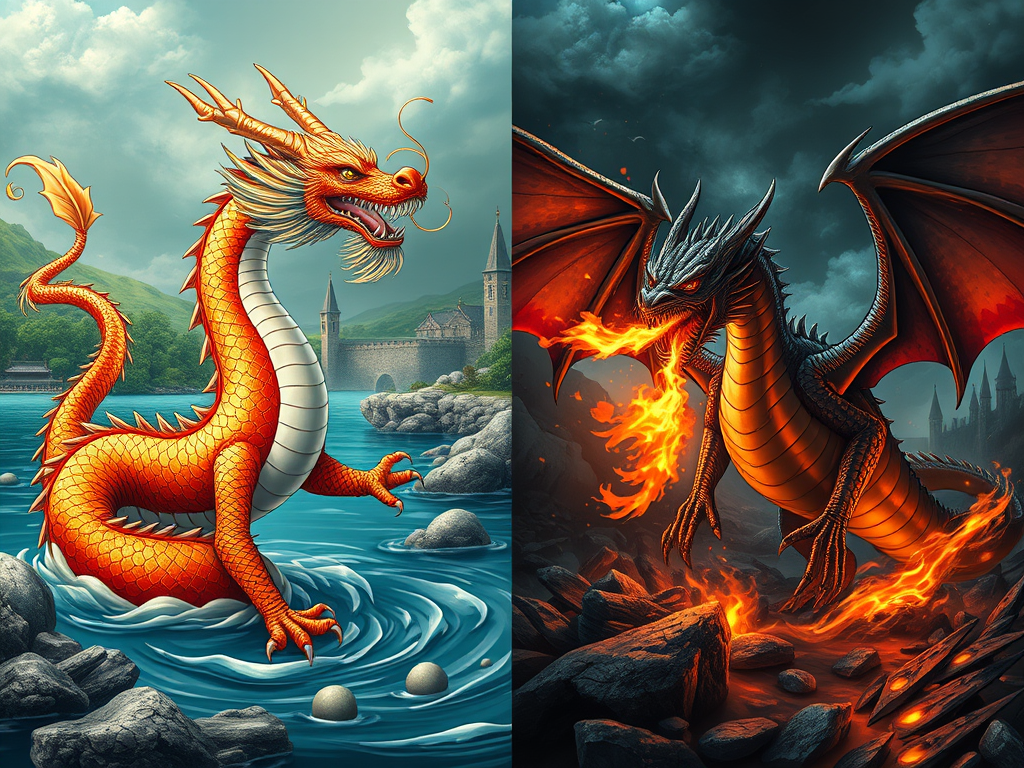
Here is a comparison table showing the main differences between Chinese dragons and Western dragons:
| Feature | Chinese Dragon | Western Dragon |
|---|---|---|
| Appearance | Serpentine body, often with fish-like scales | Reptilian body with scales, wings, and horns |
| Size | Typically long and slender | Varies in size, can be small or gigantic |
| Symbolism | Associated with power, strength, and good luck | Often depicted as evil, destructive, or greedy |
| Behavior | Generally benevolent and wise | Often portrayed as aggressive and destructive |
| Abilities | Control over water, weather, and agriculture | Breathing fire and flying with wings |
| Origins | Rooted in ancient Chinese mythology and culture | Found in European folklore and medieval tales |
| Cultural Impact | Symbol of imperial power and authority | Often portrayed as a symbol of chaos and danger |
| Color | Often depicted in various colors | Commonly portrayed as green or red |
| Number of Toes | Typically has five claws | Often depicted with four claws |
1. The Legends Begin: Origins and Mythological Roots
Chinese dragons, known as “Long” (龍) in Mandarin, trace their origins back to ancient Chinese mythology and cosmology. These dragons are revered as symbols of power, wisdom, and good fortune, often associated with the elements of water and the natural world. Unlike their Western counterparts, Chinese dragons are portrayed as benevolent beings, bringing blessings and prosperity to those they favor.
Western dragons, on the other hand, emerge from the rich tapestry of European folklore and medieval legends. These dragons are often depicted as fearsome creatures with reptilian bodies, bat-like wings, and the ability to breathe fire. In Western mythology, dragons symbolize chaos, greed, and the eternal struggle between heroes and monstrous adversaries.
2. Physical Characteristics: From Serpentine Grace to Fiery Ferocity
The physical attributes of Chinese and Western dragons reflect their cultural origins and symbolic significance. Chinese dragons are depicted as long, serpentine creatures with scaled bodies and often adorned with colorful patterns. They lack wings but are associated with water and the life-giving forces of nature. Chinese dragons symbolize auspiciousness, wisdom, and the power of the emperor.
In contrast, Western dragons are formidable creatures with reptilian features, including sharp claws, armored scales, and bat-like wings. Their ability to breathe fire adds to their fearsome reputation, making them formidable adversaries in tales of heroism and adventure. Western dragons embody themes of danger, conquest, and the triumph of human courage over primal fears.
3. Cultural Impact: From Folklore to Pop Culture
The cultural impact of Chinese and Western dragons extends far beyond ancient myths and legends. Chinese dragons are integral to Chinese culture, appearing in art, literature, and traditional celebrations such as dragon dances and festivals. These dragons symbolize unity, prosperity, and the enduring power of Chinese civilization.
In Western culture, dragons are ubiquitous in literature, art, and popular media, inspiring countless stories of adventure and heroism. From the epic tales of knights slaying dragons to modern fantasy novels and blockbuster films, Western dragons continue to captivate audiences with their awe-inspiring presence and mythical allure.
4. Symbolism and Representation: Exploring Themes of Power and Courage
The symbolism of Chinese and Western dragons reflects cultural values and beliefs. Chinese dragons symbolize imperial authority, wisdom, and the cosmic forces of nature. They are revered as symbols of good fortune and prosperity, embodying the ideals of harmony and balance in Chinese culture.
In Western mythology, dragons represent primal fears and the challenges of confronting the unknown. Heroes in Western folklore are celebrated for their bravery in facing these monstrous adversaries, symbolizing the triumph of courage over adversity and the enduring spirit of human resilience.
5. Modern Interpretations: Dragons in Literature, Film, and Gaming
In the modern age, dragons continue to inspire creativity and imagination in literature, film, and gaming. From J.R.R. Tolkien’s “The Hobbit” to George R.R. Martin’s “A Song of Ice and Fire” series, dragons play central roles in epic tales of adventure and conquest. In the realm of gaming, dragons are iconic adversaries in fantasy role-playing games and open-world adventures, challenging players to test their skills and courage against these mythical beasts.



 Culture to Know